
How Service Businesses Appear in AI Search Results (And Why Most Don't)
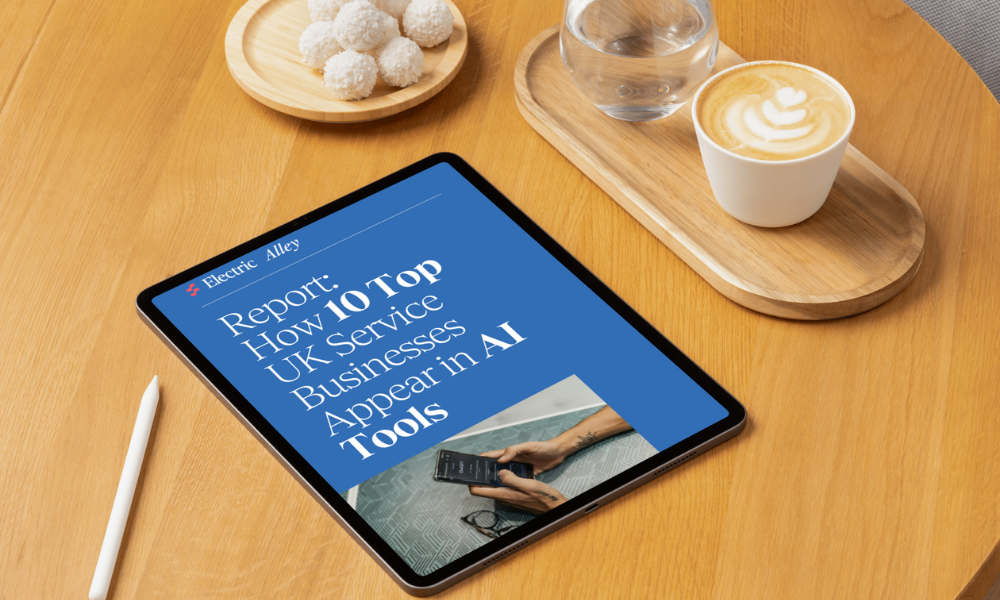
We recently analysed how AI systems like ChatGPT and Perplexity evaluate UK service businesses. Not theoretical analysis - actual testing across surveyors, accountants, consultants, and other professional services firms to see which businesses appeared in AI results and which didn’t.
The findings were clear: Only businesses that clearly outlined what they do, who they serve, and their credibility appeared in AI results. Vague or outdated businesses, or those only present on their website, were overlooked.
This shift matters because GEO (generative engine optimisation) and AI SEO (or whatever we’re calling it) operate with fundamentally different logic than Google. Traditional search principles no longer define which businesses AI recommends.
Understanding How AI Evaluates Businesses Differently Than Google
Google learned to rank websites based on authority signals - backlinks, domain age, content volume, and keyword optimisation.
AI systems need to evaluate trustworthiness and relevance without rankings. They can’t say “this business is number 3 in London” - they have to decide “is this business credible enough to recommend?”
That requires different information entirely. AI isn’t ranking websites. It’s deciding whether your business deserves to be recommended to a human being.
We Analysed UK Professional Services Firms to See What Makes the Difference
We looked at UK service businesses across sectors and locations, then queried various AI systems to see which businesses appeared in responses and how they were described.
We weren’t looking at rankings. We were looking at whether businesses appeared at all, and if so, how AI characterised them.
Then we analysed what businesses that appeared in AI results had in common, versus those AI skipped or described poorly.
Businesses That Appeared Consistently Shared Specific Characteristics
The gap between businesses that appeared and those that didn’t had nothing to do with marketing quality or budget.
It came down to clarity. Businesses whose services, audience, and credibility were easy for AI to understand appeared in AI results. Those who weren’t clear didn’t appear.
Here’s what AI needs to evaluate your business:
AI needs to understand what you actually do. Vague descriptions like “comprehensive surveying services across London and the South East” don’t give AI anything concrete. It can’t figure out what type of surveying, what kinds of properties, or which specific areas you serve.
AI needs to verify you’re credible. Professional credentials only count if AI can find them. Businesses with accreditations displayed on service pages appeared authoritative. The same credentials buried in footers didn’t register.
AI needs to know you’re still operating. Fresh content signals operational status. Businesses whose last update was from 2023 were presented with outdated context or flagged as potentially inactive.
AI needs to know when you’re relevant. Location-specific queries require location-specific information. “Nationwide coverage” doesn’t help AI match you to someone looking for services in Manchester.
Specificity Determines Whether You Appear in AI Results
One surveying firm was described by AI as "local surveying service." Their competitor was described as "RICS-accredited residential building surveyors covering North London."
Both had the same credentials and covered similar areas. The difference was how they presented the information.
The first firm said "providing comprehensive surveying services across London and the South East." AI couldn't tell what type of surveying was used or which specific areas were covered.
The second firm stated "RICS-accredited residential building surveyors. Services include building surveys, homebuyer reports, and defect analysis. Covering North London boroughs: Islington, Camden, Hackney, Haringey, plus wider coverage on request."
When someone asked AI for a building survey in Camden, the second firm was a clear match. The first? AI couldn't tell if they actually covered Camden or what exactly they offered.
This wasn't about having a specialism. It was about being clear on what you do and where you do it.
Credential Visibility Affects How AI Describes You
AI systems use professional credentials as primary trust signals, but only if they can find them.
We found businesses with credentials prominently displayed on service pages appeared more authoritative in AI descriptions. Businesses with the same credentials buried in footers or About pages didn’t get the same treatment.
One accountancy firm had “ACCA qualified” and “Chartered status” visible on every service page. Their competitor listed identical credentials at the bottom of their site.
AI described the first as credible and qualified. The second appeared generic.
Same credentials, different placement, completely different outcome.
External Validation Builds AI Confidence
Businesses that don’t exist beyond their website looked unverified to AI.
The businesses that appeared most reliably had presence across multiple platforms: Google Reviews, industry directories, professional association profiles, and published case studies on third-party sites.
One surveying firm had strong reviews on four platforms and achieved 92% positive sentiment in AI descriptions. A similar business with reviews on just one platform showed 76% positive sentiment.
Businesses with a presence across multiple sources received more detailed, credible descriptions from AI. Businesses that only existed on their own site were described generically or not mentioned at all.
The goal isn’t volume, it’s visibility across different types of sources, so AI can confirm the information is accurate.
Fresh Content Signals You're Currently Active
AI systems prioritise current information as evidence you’re still operating.
Businesses with regular content updates, monthly case studies, quarterly service page refreshes, and blog posts from this year appeared with accurate, current descriptions.
Businesses whose last update was from 2023 were presented with outdated context or described as potentially inactive.
Fresh content signals you’re in business now, not just that you existed two years ago.
Location Clarity Determines Local Search Visibility
One firm created location-specific landing pages for its top 20 cities. Each page included local case studies, coverage maps, and links to Google Business Profiles.
Their competitor had a single page stating “We cover London and the South East.”
The first firm appeared in AI results for those specific locations. The second lost local searches to businesses with clearer geographic presence.
AI needs concrete information about where you operate. “Nationwide” or “across the region” doesn’t help it match you to location-specific queries.
For local businesses, this means coverage area maps, location-specific case studies, Google Business Profiles for each office, and clear statements about which areas you serve.
For national businesses, this means explicitly listing all regions served, including regional office addresses; clearly stating “UK-wide” or “National coverage”; and showcasing case studies from different locations.
Traditional SEO Doesn't Prepare You for AI Search
Traditional SEO taught us to optimise for search engines via keyword density, meta descriptions, and backlink profiles.
AI search requires a different approach: optimise every aspect for clarity and verifiability. AI needs clear, simple information it can understand and trust, not just algorithmic signals.
Can AI understand what you do? Can it verify you’re credible? Can it confirm you’re currently active? Can it determine when you’re relevant to a specific query?
If AI cannot find clear, verifiable answers to what you do, your credibility, or your relevance, you simply won’t appear in AI results. This is not a marketing failure—it's a clarity and information gap.
Businesses Adapting Now Are Defining Their Sectors
The firms that appeared most consistently in AI results weren’t doing sophisticated technical optimisation.
They made their expertise, credentials, geographic coverage, and current status absolutely clear.
They used clear descriptions, visible credentials, consistent multi-platform presence, regular updates, and specific location information.
None of this requires technical expertise. It requires clarity and consistency in how you present your business information.
People Are Already Using AI to Find Service Providers
This shift is happening already. People are asking ChatGPT and Perplexity for service providers instead of searching Google and choosing from ranked results.
The businesses that adapt early will define how their sectors are understood by AI. They’ll be what AI shows first.
The ones that wait will find themselves described poorly, compared unfavourably, or not mentioned at all, regardless of how strong their traditional SEO is.
Three Things You Can Do This Week
Start with these changes:
Audit your service descriptions. Check if they explain exactly what you do, for whom, and where. If you’re saying “comprehensive services” or “we provide solutions,” rewrite them to be specific. State your credentials, your specialism, and your geographic coverage clearly.
Move your credentials. If your professional accreditations are in your footer, put them on every service page. Make them visible where AI will connect them to your expertise.
Update your content. If your newest content is more than three months old, publish something this week. A case study, a project update, a market insight. Give AI evidence that you’re currently active.
Download The Report
This post covers our main findings, but the complete guide includes more detail on how AI evaluates service businesses, which specific changes make the biggest difference, comparative examples showing what works versus what doesn’t, and checklists you can use to audit your own business against these criteria.
We also break down the difference between local and national business strategies, how to structure service pages for AI comprehension, which platforms actually matter for external validation, and what “fresh content” means in practice.
The research showed that AI visibility isn’t about technical sophistication. It’s about clarity, verification, and current operational status.